Where the eight phases come from
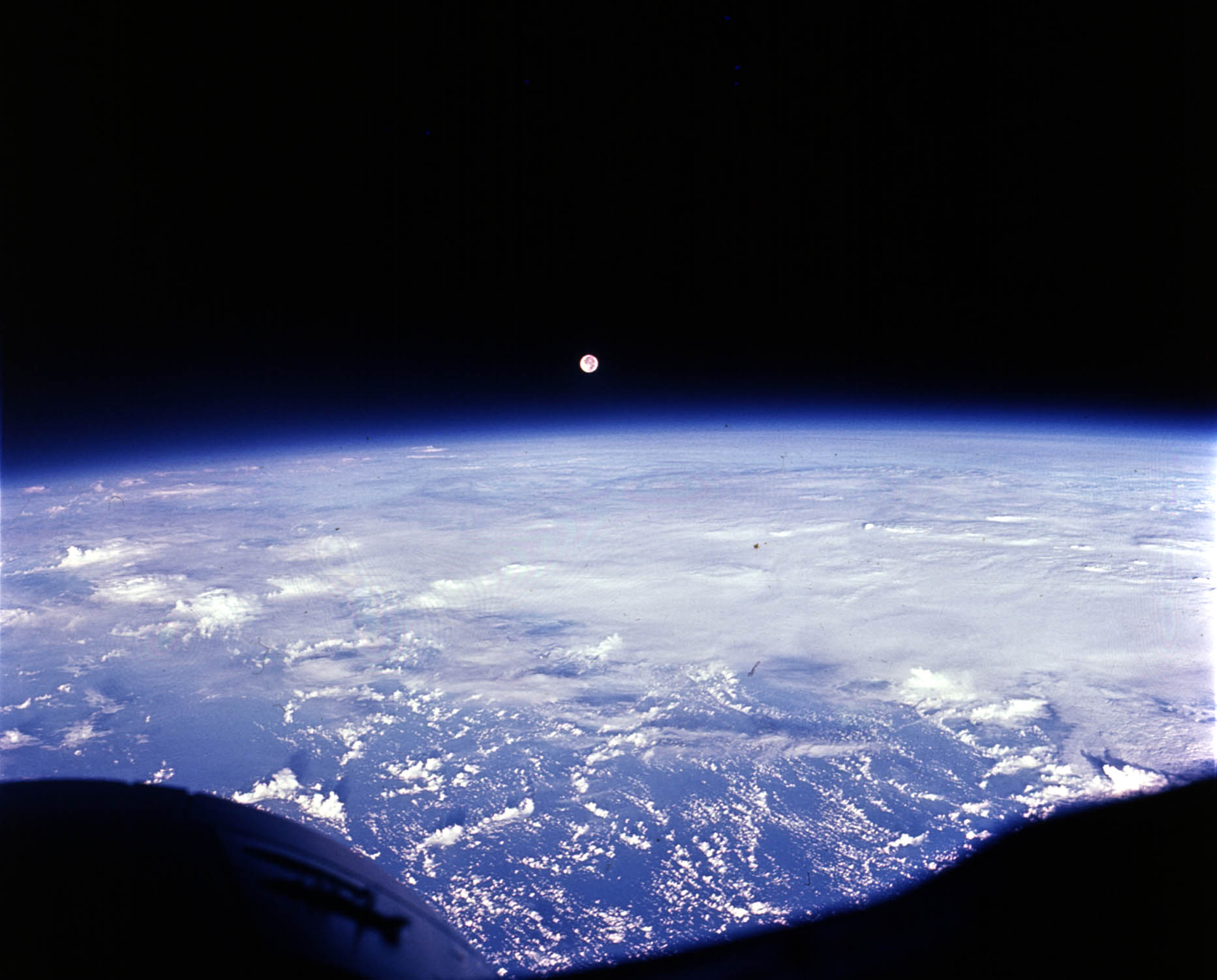
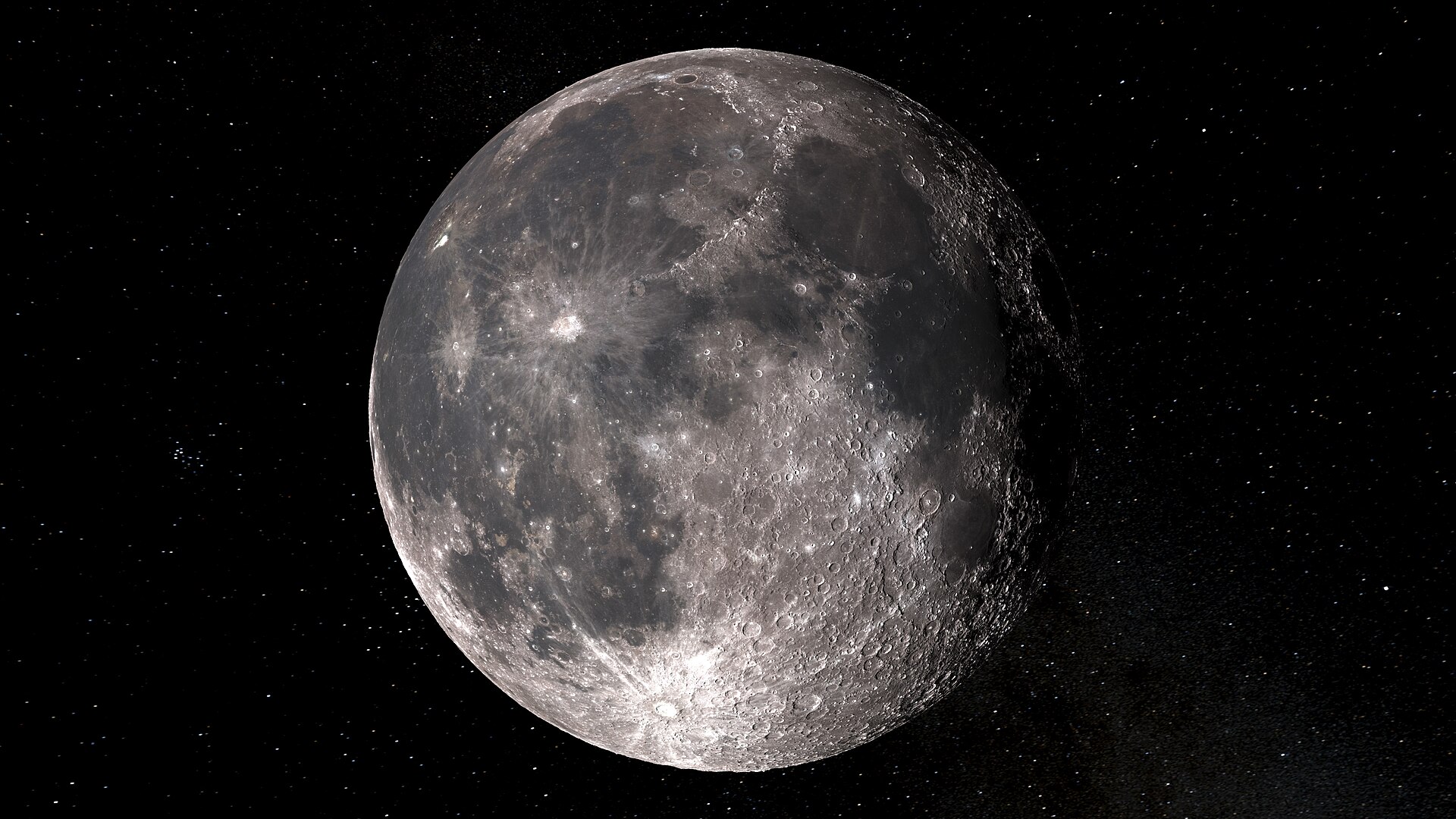
The moon has no light of its own; half of it is always sunlit. What changes during the 29.53-day synodic month is our viewing angle on that half. Astronomers measure the phase with a single quantity: the difference in ecliptic longitude between the moon and the sun, as seen from Earth. At 0° the moon is in the same direction as the sun and its lit hemisphere faces away from us — new moon. At 180° it is opposite the sun and we see the entire lit hemisphere — full moon. At 90° and 270° we see exactly half, the first and last quarters. Everything else is a crescent (less than half lit) or gibbous (more than half lit), waxing when the illuminated fraction grows and waning when it shrinks.
Two consequences matter for gifts. First, the phase is set by geometry, not by mood or folklore: the moon above a wedding venue at 9 p.m. can be calculated to the minute centuries in advance. Second, the cycle is asymmetric in feeling though symmetric in degrees: the waxing half builds toward light, the waning half releases it, which is why the "same" crescent three days before and three days after new moon carries nearly opposite emotional tones. A credible moon poster computes the sun-moon elongation rather than showing a generic crescent clip-art.
The eight phases and what they mean
Astronomy defines the phase; cultures have layered meaning onto it. These readings are traditions, not physics — but knowing them helps you choose the phase whose symbolism fits the event.
| Phase (elongation) | Sky behavior | Cultural meaning |
|---|---|---|
| New moon (0°) | Up by day, invisible | Blank page, intention, beginnings; a seed before the sprout |
| Waxing crescent | Sliver in the western dusk | Hope, first commitment, setting a wish in motion |
| First quarter (90°) | Half disk, high at sunset | Decisions under tension; the Chinese 上弦 moon suggests disciplined action |
| Waxing gibbous | Mostly bright, rises afternoon | Refinement and persistence; almost-there energy |
| Full moon (180°) | Rises at sunset, up all night | Fulfillment, celebration, peak visibility; in many traditions the communal moon |
| Waning gibbous | Rises late evening | Gratitude, sharing, passing wisdom on |
| Last quarter (270°) | Half disk, high at sunrise | Release and forgiveness; letting go of what did not serve |
| Waning crescent | Sliver before dawn | Surrender, rest, composting; the dark before the next new cycle |
Chinese tradition mirrors the lunar logic in its calendar: 朔 is the new moon that opens each lunar month, 望 the full moon at mid-month, with 上弦 and 下弦 for the two quarters. Mid-Autumn Festival falls deliberately on 望, when the moon's completeness mirrors reunion.
The moon that night: three gift scenes
- Weddings. A full-moon wedding prints spectacularly; a crescent wedding prints more privately. The point is not to wish for a full moon but to render the true phase — guests who recall "it was so dark the stars were ridiculous" will recognize a new-moon poster instantly. Use the moon phase poster with the ceremony city and local time.
- Births. Night-shift babies have a moon, and so do daylight babies — the phase exists around the clock even when below the horizon. A moon-phase print next to the birth data names the sky the child arrived under without claiming the child's personality from it.
- Confessions and proposals. These often happen outdoors at night, where the phase was part of the actual lighting: a thin crescent forces a waterfront walk and a hand held; a full moon emboldens a rooftop question. The poster is a diagram of the light the question was asked in.
Pairing moon posters with star maps
A moon phase and a star map are complementary evidence, not rivals. The phase answers "what was the moon doing?"; the star map answers "what was the whole sky doing?" On a full-moon night most stars were visually washed out, so pairing a dazzling star disk with a full moon quietly contradicts what anyone could have seen — one reason to display them as two related panels rather than one composite scene. A strong pairing is a small 12-inch moon-phase print beside a larger star map poster, or twin 12-inch squares with matching typography. For children, a birthday night sky and its moon together turn a birth date into a small astronomical diptych.
Accuracy, time zones and the exact minute
The phase angle is the same worldwide at one instant, but the local clock time and even the calendar date change with longitude, so a phase is always computed from the event's local date, local time and location together. Two pitfalls account for most wrong prints: entering UTC instead of local time, and choosing a date at midnight when the event was in the evening. If the exact minute is unknown, enter an evening hour; the phase moves only about twelve degrees of elongation per day, so an hour's uncertainty barely changes the shape, while a date error of one day near quarter phase shifts the terminator visibly.
If you want to understand how precise these charts really are — the catalogs, the sidereal-time math and the limits — read how star maps work, and for an honest accuracy check before ordering a print, see are star maps accurate. The short version: modern dates are modeled far more precisely than any poster could show.
Choosing orientation, size and wording
Print the moon large enough that the terminator reads as softly curved rather than a clipped edge: a moon disk below about five inches wide loses the crater-scale texture that separates a real phase from a flat icon. Keep the title line short — place name and date carry the story; a moon needs no paragraph. Dark backgrounds suit night scenes, but a light gallery-style panel can make a crescent look like an art print rather than a screensaver. If the print joins a gallery wall, give all pieces the same frame width and let the moon be the one circular moment among rectangles.
Small questions people always ask
- Can the moon be wrong for my date? No. Lunar phases can be reconstructed for any historical date; the new-moon dates of ancient eclipses were used to date Babylonian records. Only the input time can be wrong.
- Does a full moon mean good luck? Folklore says so in many cultures; astronomy says the couple picked the brightest possible night to dance outside. Either reading is a good gift.
- Which is more meaningful, phase or stars? The phase is the one sky fact almost everyone present actually remembers; the stars are the secret only the two of you now share.
八个月相从哪里来
月亮自己不发光,它总有一半被太阳照亮。在 29.53 天的朔望月里变化的,是我们观察这半个亮面的角度。天文学用一个量来定义月相:从地球上看,月球与太阳的黄经之差。相差 0° 时,月亮与太阳在同一方向,亮的一面对着别处,我们看不见——这是新月;180° 时日月遥遥相对,整个亮面朝向我们——这是满月;90° 和 270° 时恰好看见一半亮面,就是上弦与下弦。其余的位置,亮面少于一半叫蛾眉月,多于一半叫盈凸月/亏凸月;亮的部分在变大叫「盈」,在缩小叫「亏」。
对礼物来说有两个推论。第一,月相由几何决定,与心情和传说无关:婚礼场地晚上九点的月亮,可以提前几百年精确算到分钟。第二,月相周期在角度上对称,感受上却不对称:盈的一半朝光生长,亏的一半把光放下,所以新月前后各三天那弯「同样」的月牙,情绪几乎相反。一张可信的月相海报计算的是日月距角,而不是放一弯通用的月牙剪贴画。
八个月相和它们的寓意
天文定义月相,文化则把寓意一层层叠加上去。以下含义是传统而非物理——但知道它们,有助于挑到象征意义与事件相称的那一相。
| 月相(距角) | 在天上的样子 | 文化寓意 |
|---|---|---|
| 新月(0°) | 白天在天,肉眼不可见 | 空白、许愿、开端;发芽之前的种子 |
| 蛾眉月(盈) | 黄昏西天一弯细线 | 希望、最初的承诺、愿望开始启程 |
| 上弦月(90°) | 半圆,日落时已高悬 | 张力中的抉择;上弦也对应克制与行动 |
| 盈凸月 | 大半已亮,下午升起 | 打磨与坚持,差一点到的能量 |
| 满月(180°) | 日落而升,彻夜可见 | 圆满、庆祝、能见度最高;许多文化里属于众人的月亮 |
| 亏凸月 | 入夜后才升起 | 感恩、分享、把经验传下去 |
| 下弦月(270°) | 半圆,日出时高悬 | 释然与原谅;放下不再服务于你的东西 |
| 残月(亏) | 黎明前一弯细线 | 交托、休息、化为养分;下一个轮回之前的暗 |
中国传统用自己的历法承接这套月亮逻辑:每个农历月以朔(新月)开始,以望(满月)居中,上弦、下弦分居两侧。中秋节特意落在望日,让月的圆满与人间团圆互为镜像。
那晚的月亮:三个送礼场景
- 婚礼。满月婚礼印出来极其华丽,月牙婚礼则更私密。重点不是祈求得一轮满月,而是呈现真实的那一相——记得「那晚黑得星星夸张」的宾客,会一眼认出新月海报。用月相海报,填婚礼城市与当地时间。
- 出生。夜班出生的宝宝有月亮,白天出生的宝宝也有——月相昼夜都存在,只是有时在地平线以下。月相画配出生数据,命名了孩子抵达时的天空,但不用它去断言孩子的性格。
- 告白与求婚。这类事常发生在夜晚的户外,月相本身就是现场光线的一部分:一弯细月逼着你们沿海边散步、牵起手;满月则给天台上的提问壮了胆。海报画的,就是那个问题被问出口时的光。
月相海报与星空海报如何搭配
月相与星空是互补的证据,不是竞争关系。月相回答「月亮当时在做什么」,星图回答「整片天空当时在做什么」。满月之夜大多数星星其实被月光冲淡,如果把一张繁星密布的圆盘和满月硬拼在同一画面里,就悄悄违背了当晚任何人能亲眼看到的景象——这是更适合把它们做成两张相关联的画、而不是合成一张图的原因。很稳的搭配是:一张 12 英寸小月相配一张更大的星空地图海报,或两张统一排版的 12 英寸方图。给孩子的话,一张生日夜空海报配它当晚的月相,就把一个生日变成了一组小小的天文双联画。
准确性、时区与具体分钟
同一瞬间,月相角度全世界相同,但当地钟表时间、乃至日历日期都随经度变化,所以月相永远要由事件的当地日期、当地时间和地点三者一起计算。印错的画大多来自两个坑:把协调世界时(UTC)当成当地时间填了;以及事件明明在晚上,却随手选了当天午夜。不确定具体分钟时,填一个晚间时刻即可:月相每天只移动约十二度距角,一小时的误差几乎不改变形状,而在弦月前后差一天,明暗界线就明显挪位。
如果想了解这些图到底有多精确——星表、恒星时计算和误差边界——可以读星空地图是如何工作的;下单印刷前想要一份诚实的准确性核对,请看星空地图准确吗。简单说:现代日期的模拟精度,远超任何海报能够显示的程度。
方向、尺寸与文字的选择
月亮要印得足够大,明暗界线才会呈现为柔和的弧线而不是被切掉的直边:月盘直径小于约五英寸(约 13 厘米)时,那种区分真实月相与扁平图标的月表质感就丢了。标题行保持简短——地名和日期已经承载了故事,月亮不需要一整段话。深色背景贴合夜晚场景,而浅色画廊风底板能让一弯月牙看起来像艺术印刷品而不是屏保。如果要挂上照片墙,让所有画保持相同的框宽,把月亮作为矩形阵列中唯一一个圆形的瞬间。
大家常问的小问题
- 我那天的月亮会不会算错?不会。任何历史日期的月相都能重建,古代日食的新月日期甚至被用来给巴比伦文献断代。会错的只有你输入的时间。
- 满月是不是意味着好运?许多文化的民俗这么说;天文学则说,这对新人挑了整晚最亮的一夜在户外跳舞。两种解读都是好礼物。
- 月相和星空哪个更有意义?月相是在场的人几乎都真正记得的那一个天象;星空则是如今只有你们俩分享的秘密。